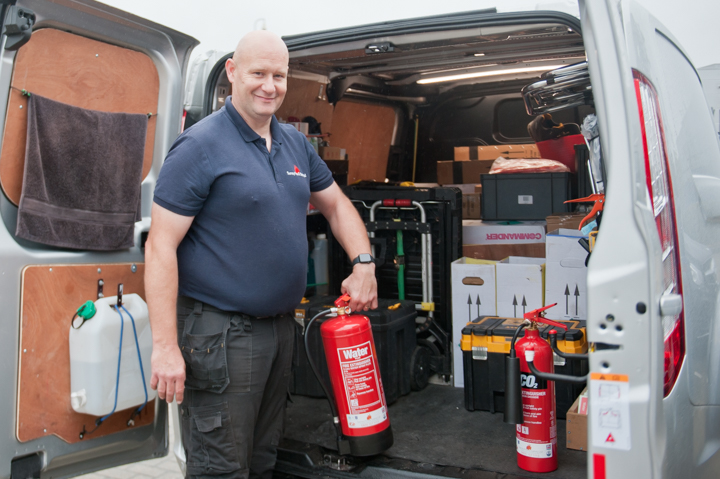
20 Easy Reasons For Solihull PAT Testing And Fire Extinguisher Servicing
Blog Article
Top 10 Tips To Establish The Amount Of PAT Testing Required For The in Solihull
It is a common challenge for UK dutyholders to determine the appropriate frequency for Portable Appliance Testing. Contrary to widespread misconception, there is no mandated statutory interval–such as an annual requirement–specified in the Electricity at Work Regulations 1989. Regulation 4(2) places a duty on employers or persons responsible to set up a proper maintenance regime based on a structured risk analysis. Health and Safety Executive has endorsed this risk-based method, which moves away blanket testing schedules and mandates a justifiable, documented explanation for all inspection and tests intervals. It is important to determine the frequency by evaluating equipment type, operating environment, users and previous history. This makes PAT scheduling more dynamic than a calendar-based, passive compliance exercise.
1. The Absolute Primacy of Risk Assessment
The frequency for testing is not dictated by law. However, the dutyholder must conduct a sufficient and appropriate risk assessment. This document is the basis for your PAT test regime. It must consider all factors that could cause an appliance to become dangerous and dictate how often it should be inspected and/or tested to mitigate that risk. An inspector from the HSE will expect to see this assessment and will judge the testing frequency against its conclusions. Any testing schedule would be non-compliant and arbitrary without it.
2. Key Factors Influencing Testing Intervals
The risk assessment must systematically evaluate several core factors to determine a defensible frequency. These include: Type of Equipment: Class 1 appliances (e.g. toaster ovens, kettles), which are earth-dependent, require more frequent checks than Class 2 (double-insulated appliances). The environment: An adverse setting (such as a construction site or workshop) requires more frequent testing than an office. Equipment that's used by well-trained employees might need less testing than equipment for the general public. Appliance construction: More robust equipment is less likely to be a risk. Previous History: Appliances that have a history of faults require more frequent maintenance.
3. The importance of formal visual inspections
Formal visual inspections are a legally valid part of the maintenance regime and are often more important than combined inspection and testing. They can identify the majority of faults, such as cable damage, loose plugs, casing damage, and contamination. In many cases, for low-risk appliances and environments (e.g. a desktop computer at an office), all that may be required is a formal inspection by a person with the necessary expertise. No need to perform routine electronic tests. Risk assessments also determine how often these formal visual tests are performed.
4. First-Line Maintenance and User Checks
Checking the users is the first step in any formal process. The dutyholder needs to ensure that users perform a basic visual check before use for obvious damage signs, such as frayed wires, burn marks and loose parts. Although not part of the formal system of PAT, promoting user awareness can be a vital part of an holistic risk-based strategy and help identify issues between scheduled formal inspections.
5. Code of Practice of IET – Guidance
The IET Code of Practice, while not a law, provides valuable advice on the recommended frequencies for initial equipment. It includes a table with recommended frequencies for different types of equipment and in various environments. The table can serve as a starting point in the risk assessment of duty holders. It might, for example, suggest that equipment on a building site be visually inspected every three months but IT equipment in a office is inspected at intervals of 24 months. These initial recommendations will be revised based on the actual experience.
6. The concept of "Result Based Frequency Schedules"
The results of the previous tests can be used to adjust future test frequencies. If a particular appliance, or group of appliances, has consistently passed its tests over several years without error, a risk assessment may be conducted to justify increasing the testing interval. In contrast, if an appliance type is prone to failure, the interval can be shortened. The enforcement authorities are very supportive of this dynamic and evidence-based approach.
7. New Appliances & Equipment
One common myth is the idea that new equipment should not be tested. Although it may not be necessary to perform a formal combination test prior to first use, an official visual inspection must still be performed in order for any transit damage and for the correct wiring on the plug as well as the suitability of the product for the UK market. The risk assessment will determine a date to perform the first test on new equipment. This will integrate it into existing maintenance schedule.
8. Hired or Borrowed Gear
Equipment brought into the building, such as tools hired by contractors or equipment they use, must be added to the PAT. The dutyholder is responsible for ensuring that the equipment is safe to use. Such equipment is usually subject to conservative risk assessments, which require an inspection and testing immediately before the first use.
9. Documenting the rationale for selected frequencies
Documentation is used to demonstrate compliance. The risk analysis must not only record the frequency selected for each appliance but also include the reasoning that led to this decision. This document is the evidence of "due diligence." It should mention the factors taken into consideration (environment, users, equipment types) and, when applicable, refer to IET Code of Practices or the results of past testing history in order to justify intervals.
10. Reviewing and Adjusting Intervals on a Regular Basis
The risk assessment and the testing frequencies it dictates are not static documents. Regulation 4 in the Electricity at Work Regulations of 1989 states that maintenance must be performed continuously. The dutyholder should review the risk assessments and effectiveness of testing intervals regularly (e.g. annually) or following any significant changes, such as near-miss incidents, equipment changes, or changes in the workplace. This ensures the system remains effective and proportionate. Have a look at the top rated electrical testing in Solihull for more advice.
Top 10 Tips On The Reputation And Experience Of Fire Extinguisher Servicing in Solihull
When it comes to fire safety, technical compliance, although essential, is only one aspect of the puzzle. The name and the expertise of the company that will service your fire extinguishers are equally important. They differentiate good service providers from the best ones. While certificates such as BAFE SP101 indicate technical proficiency, they do not automatically reflect a company's expertise, customer service ethos, or track record on the job. Technicians who have more experience are able to spot subtle indicators such as wear or improper use. Reputation, built over years of reliable and consistent service, is the market's collective evaluation of a business's reliability, responsiveness, and overall worth. For the Responsible Person, evaluating these softer factors is a crucial due diligence measure that guarantees that the service you choose to use does not just match the requirements on paper, but also provide quality service that is and reliable. It is also tailored to your particular operational requirements and requirements, ultimately becoming a crucial component of your fire safety plan.
1. The significance of trading History and Longevity in Solihull
The length of an organization's operation is an indicator of its stability and resilience. A provider that has been successfully trading for a decade or more has likely navigated economic cycles, adapted to changing regulations, and refined its operational practices. This longevity indicates a successful business model, as well as the capacity to keep customers for a long time. This is a clear indication that they have successfully resolved issues and maintained a standard of customer service that keeps clients coming back. Although a brand new company might not be a bad fit by nature however, it does pose a risk. Investigate the history of a company. This information can be located on their website under the "About Us" section or verified using a free search on Companies House.
2. Specialisation and experience specific to sector in Solihull
All buildings are not created equal. The risks of fire and operational constraints for industrial structures are different from those in the classroom, office block located centrally in London or a historical listed building. Experience in a variety of areas is an indication of a highly regarded company. When researching, look for case studies, customer lists, or testimonials that refer to your specific facility. A company with experience in your specific field is aware of unique issues like the demands of 24/7 data centres for off-hours work, the necessity to reduce disruption within a bustling retail setting as well as the rules applicable to healthcare facilities. This knowledge is priceless and goes beyond the scope of general service.
3. Client testimonials and online reviews can be incredibly powerful.
In this digital age companies' reputations are publically curated through platforms such as Google Reviews, copyright, and other directories based on industry. Reviews can give direct insight into the experience of customers. If you're analyzing these reviews, don't only glance at the star rating. For more information you can look through the specific remarks. Positive signals are the fact that customers are consistently praising punctuality, communication clarity, the helpfulness of engineers, and the thoroughness. Pay attention to complaints that repeatedly refer to bad communication, missed appointments, or billing mistakes. It is crucial to be aware of a company's responses to reviews that are negative. A professional and sympathetic response that focuses on solutions shows dedication to customer service.
4. Word of Mouth suggestions and references in Solihull
Online reviews can be helpful, but a recommendation by someone you trust is more effective. Ask for the recommendations of facilities managers or business owners in your circle. This is especially crucial when you're in the same industry. If they're willing, a reputable company would be glad to give you the contact information of customers who will share their experiences. Contacting a client directly will allow you to ask questions specific to reliability or problem-solving as well as the value over time of the relationship, providing an additional level of confidence.
5. The Calibre and Demeanour of Engineering Staff in Solihull
The engineers that are in the frontline of a firm will ultimately determine the company's reputation. You can learn about their standards through their sites. Reputable and experienced companies make a significant investment in their workers. This includes not only technical training but also customer service. The engineers they employ should possess professional manners and clearly identified by their uniforms, and be willing to explain their work. They must know how to answer questions and also be able to identify any issues or suggestions. The level of engineering quality across an organization is directly related to the company's management and training methods.
6. Trade and Professional Organisations in Solihull
While it's not a precise measure of quality, being a member of organizations such as the Fire Industry Association (FIA) or British Fire Consortium (BFC) indicates a company's commitment to stay at the top of its field. These associations give access to the latest technical information as well as networking opportunities and ongoing professional development. Being active in your activities, such as taking part in seminars or working groups, displays a committed company. This boosts the company's reputation and standing within the fire professional community.
7. Precontract Communication and Answering Questions in Solihull
Your first interactions with a company are a good indicator of the future performance. A reliable service provider will be professional, responsive, and helpful at the initial point of contact. A trustworthy provider will give you a clear, transparent and complete quote, without the pressure. Note how quickly you receive a reply from them. Are they willing to provide documents, for example copies of insurance documents or certificates? If a business is difficult to work with prior to the time you sign a contract, they'll be more difficult after.
8. The Scope and Clarity of Service Level Agreements (SLAs) in Solihull
A reliable and seasoned company will provide a thorough Service Level Agreement. This document must clearly state what services are included, how often they will be visited as well as the timeframes for responding for calls or inquiries as well as the format for documentation and delivery, and the fault resolution process. Uncertain or simple contracts are red flags. A clear SLA will show a company's capability to manage expectations of clients.
9. Continuity in the management of accounts in Solihull
The low turnover of staff members and the presence of a dedicated point of contact or account manager are both signs of a trustworthy business. This creates a solid, trusting relationship, as it provides continuity. Communication issues can be caused by a high staff turnover, and also infrequent appointments or a lack of institutional knowledge. Ask potential providers about their retention of staff and their the structure of their account management.
10. Handling Complaints and Problems in Solihull
Even the most reputable of businesses can encounter problems from time to time. The most important thing that determines a business's reputation isn't if they face problems and how they manage to solve the issues. An established company will have an organized, clear, and fair complaints procedure. They will admit to problems, and be open about how they are being solved, and strive to find a solution. Ask how they tackle issues with customer service. A defensive or evasive method is a red flag. However, a proactive and open approach is the hallmark of a business with a solid reputation. Check out the top fire extinguisher maintenance in Solihull for site advice.